
Make AI an Opportunity, not a Threat

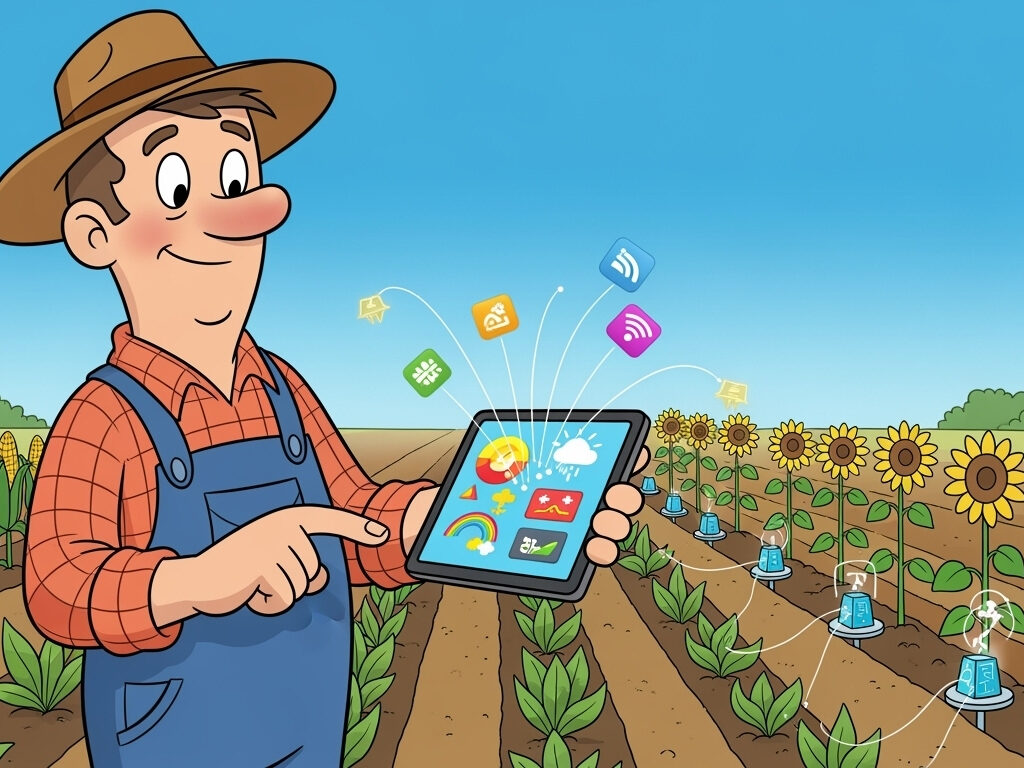
AI isn’t coming to Australian workplaces – it’s already moved in and made itself at home. From the wheat fields of Western Australia to the mining sites of Queensland, artificial intelligence is quietly getting on with the job of making things faster, cheaper, and more efficient. But before you start polishing up your resume in a panic, here’s some good news: the jobs that really matter – the ones that need a human brain, heart, and gut instinct – aren’t going anywhere. In fact, they’re becoming more valuable than ever.
Let’s have a look at what’s happening right now, not in some distant future. AI is currently mapping crop yields to help farmers make smarter decisions about planting and harvesting. In our mining industry, it’s predicting when equipment might fail before it actually does, saving companies millions in downtime and repairs. Meanwhile, in hospitals across the country, AI is helping radiologists spot problems in medical scans faster and more accurately than ever before.
These aren’t pie-in-the-sky examples – they’re happening today, making Australian businesses more productive and competitive on the world stage. The pattern is clear: AI excels at tasks involving pattern recognition, data analysis, and routine paperwork. If your job involves sifting through spreadsheets, processing forms, or spotting trends in large amounts of information, chances are AI is already eyeing your in-tray.
But here’s where it gets interesting. The most successful implementations of AI aren’t replacing humans entirely – they’re freeing up human workers to focus on the stuff that really matters.
The jobs that are not just surviving but thriving in this new landscape have one thing in common: they combine deep people skills with industry knowledge. Think relationship managers who use AI-generated insights to have better conversations with clients. Or aged-care coordinators who use AI to track health patterns while providing the emotional support that no computer can offer.
Change-management professionals are another great example. They might use AI to analyze organizational data and predict resistance points, but when it comes to actually helping people navigate change, building trust, and communicating with empathy – that’s pure human territory.
These roles represent the sweet spot where technology amplifies human capability rather than replacing it. The AI handles the number-crunching and pattern-spotting, while humans bring creativity, judgment, and that indefinable quality we call “people sense.”
Curious about how AI is already working in your field? Here’s a simple way to find out:
- Open Google and search for “[your industry] AI case study Australia”
- Look for one success story that shows humans and AI working together
- Pay attention to what the AI does versus what the humans contribute
- Share that example at your next team meeting or coffee break
This exercise helps you see AI as a tool that enhances human work rather than a threat that eliminates it.
If you’re wondering which types of jobs offer the most security in an AI-enhanced world, look for roles that require:
Emotional Intelligence and Empathy: Counselors, customer service managers, team leaders, and healthcare workers who need to read between the lines and respond to human emotions.
Creative Problem-Solving: Jobs that require thinking outside the box when standard solutions don’t work. This includes project managers dealing with unique challenges, consultants helping businesses adapt, and professionals who need to innovate on the fly.
Complex Communication: Roles involving negotiation, persuasion, teaching, or explaining complex ideas to different audiences. These require understanding context, reading the room, and adapting your message accordingly.
Ethical and Strategic Judgment: Positions where you need to weigh competing priorities, make decisions with incomplete information, or consider the broader implications of actions.
Local Knowledge and Relationships: Jobs that rely on understanding local culture, building long-term relationships, or navigating community dynamics.
Healthcare: While AI can flag potential issues in medical imaging, it takes an experienced radiologist to understand the patient’s history, communicate with worried families, and make nuanced treatment decisions.
Education: AI might help teachers identify which students are struggling with specific concepts, but inspiring young minds, managing classroom dynamics, and adapting lessons on the fly remain distinctly human skills.
Agriculture: Farmers use AI to optimize planting schedules and predict yields, but decisions about land management, dealing with unpredictable weather, and managing farm operations still require human experience and intuition.
Finance: AI can analyze market trends and flag unusual transactions, but financial advisors who build trust with clients, understand their unique circumstances, and provide reassurance during market volatility are more valuable than ever.
The key to thriving in this new landscape isn’t to compete with AI, but to learn how to work alongside it. This means developing what we might call “AI literacy” – understanding what these tools can and can’t do, and knowing how to use them to enhance your existing skills.
Start by identifying the routine, repetitive parts of your job that eat up time but don’t require your unique expertise. These are prime candidates for AI assistance. Then focus on developing the distinctly human aspects of your role – the relationship building, creative thinking, and strategic decision-making that AI can support but never replace.
Take 10 minutes to list:
- Tasks in your job that involve data analysis or pattern recognition (potential AI assistance)
- Parts of your role that require empathy, creativity, or complex judgment (your human advantage)
- How AI tools might handle the first list so you can focus more on the second
This exercise helps you see where you fit in the human-AI partnership.
AI is transforming Australian workplaces, but it’s not the job-destroying tsunami some people fear. Instead, it’s creating opportunities for workers who understand how to combine their uniquely human skills with powerful new tools.
The professionals who’ll thrive are those who see AI as a capable assistant rather than a threatening competitor. They’re the ones who’ll use these tools to handle the routine stuff while focusing their energy on the complex, creative, and deeply human aspects of their work.
Your experience, wisdom, and ability to connect with people aren’t becoming obsolete – they’re becoming more valuable than ever. The trick is learning how to pair these strengths with AI capabilities to become more effective than either humans or machines working alone.
The AI revolution is here, but it’s not a zero-sum game. There’s room for both artificial intelligence and human intelligence to flourish together. The question isn’t whether you’ll be replaced by AI, but how you’ll team up with it to do your best work yet.
Sources:
-
Australian Parliament House: AI Impacts on Industry and Workers
-
Xanda: AI Examples in the Workplace