
Don’t Let the AI Train Leave Without You

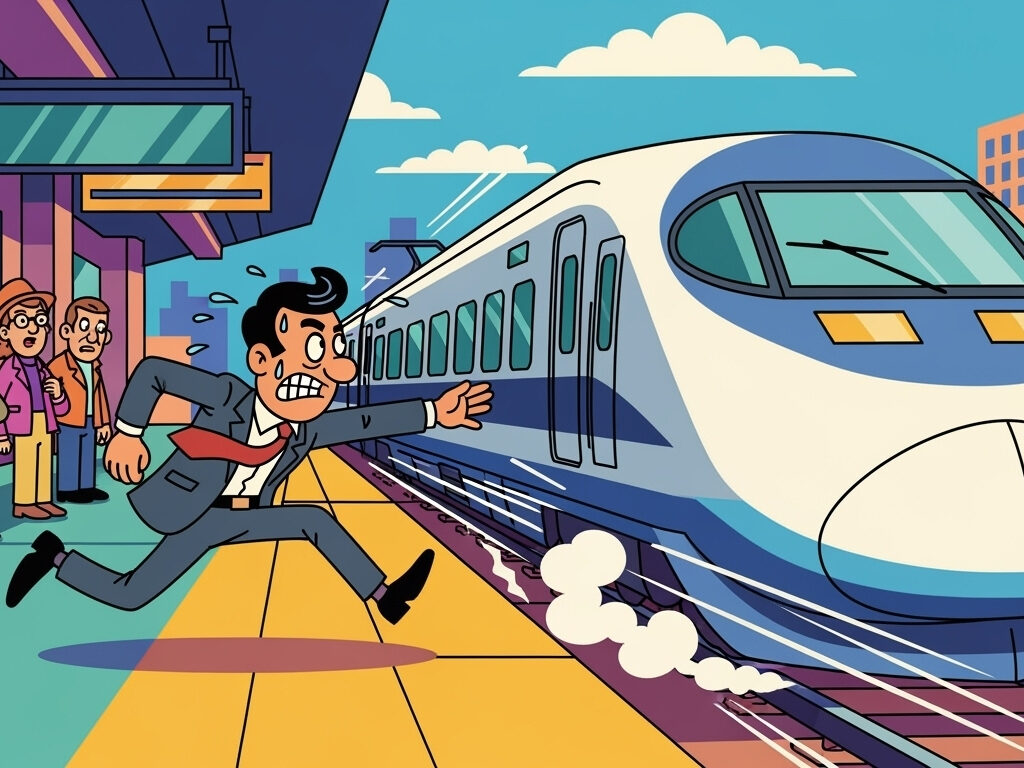
If you’re reading this and thinking “AI is just another fad that’ll blow over,” you might want to think again. We’re standing at the crossroads of one of the biggest workplace shake-ups since computers first appeared in offices, and just like those previous game-changers, this one’s going to create more opportunities than it destroys – but only for those who get their skates on and adapt.
Let’s take a trip down memory lane, shall we? Back in the 1980s, when computers started appearing in Australian offices, there was quite the hullabaloo. Typists were convinced word processors would send them to the unemployment queue, and accountants thought spreadsheet software would make them as useful as a chocolate teapot. Sound familiar?
But here’s the rub – instead of creating mass unemployment, computers actually created millions of new jobs. Suddenly, we needed computer operators, programmers, systems analysts, and a whole host of technical support specialists. Those clever clogs who embraced the change found themselves in roles that didn’t even exist before, often with better pay and working conditions. The businesses that adopted these new tools could do more work, faster and more accurately, which meant they could grow and hire more people.
The same pattern played out right here in Australia when our banks went digital in the 1980s. Sure, some teller positions disappeared, but the banks created new roles in customer service, financial planning, and systems management. The key was adaptation – those who rolled with the punches rather than digging their heels in came out on top.
If we really want to understand what we’re dealing with, we need to go way back to around 1440 when Johannes Gutenberg invented the printing press. Talk about causing a stir! The scribes and manuscript copyists were absolutely beside themselves, convinced this new-fangled machine would put them out of work.
But what actually happened? Within just 60 years, there were over 1,000 printing presses across Europe, creating thousands of jobs that hadn’t existed before. Publishers, typesetters, ink makers, paper producers, and book distributors all became new professions. And here’s the kicker – because books became cheaper and more available, more people learned to read, which created demand for teachers, librarians, and other education jobs. It was a classic case of one door closing and several windows opening.
The printing press didn’t just create jobs – it revolutionised society. Information became accessible to ordinary people, not just the wealthy elite. It’s a fair dinkum transformation that changed the course of human history.
Fast forward to 1988 when Adobe Photoshop burst onto the scene. If you thought the computer revolution caused panic, you should have seen the creative industries! Graphic designers, photographers, and typographers were convinced these digital tools would devalue their skills and turn everyone into a designer.
Instead of destroying the industry, digital design software caused it to absolutely explode. Web designers, user interface specialists, digital photographers, and multimedia artists emerged as completely new professions. Between 1990 and 2010, employment in creative fields grew by over 300%. Suddenly, every business needed websites, digital marketing materials, and online content – work that simply didn’t exist before these tools came along.
The beauty of it was that while the software made basic design tasks easier, it actually created demand for higher-level creative thinking and strategic design. The tools became more powerful, but you still needed human creativity, judgment, and understanding of what looks good and communicates effectively.
We Australians have always been pretty good at adapting when push comes to shove. When farming became mechanised in the early 1900s, it initially displaced agricultural workers, but it led to increased food production and the growth of manufacturing industries. The introduction of assembly lines in the 1920s worried factory workers, yet it created new supervisory and quality control roles while making products more affordable for everyone.
Each time, the same pattern emerged: initial anxiety, followed by new opportunities for those who were willing to learn and adapt. The Australian Bureau of Statistics data shows that technological adoption has consistently led to wage growth and improved working conditions across most sectors over the past century.
Here’s where the rubber meets the road. AI is following the exact same playbook as these previous technological disruptions. Early adopters are already seeing productivity gains of 20-40% in tasks like writing, analysis, and problem-solving. New roles are emerging: AI trainers, prompt engineers, AI ethics specialists, and human-AI collaboration coordinators.
The writing’s on the wall – companies are increasingly seeking employees who can effectively use AI tools to enhance their work, not replace human judgment and creativity. If you’re sitting on the sidelines waiting to see what happens, you might find yourself playing catch-up when everyone else has already learned to work alongside these tools.
But here’s the good news: you don’t need to become a tech wizard overnight. Just like you didn’t need to become a computer programmer to benefit from computers, you don’t need to understand the nuts and bolts of AI to use it effectively in your work.
So what should you be doing right now? First, don’t panic – but don’t bury your head in the sand either. Start small by exploring how AI tools might help with tasks you’re already doing. Whether it’s writing emails, analysing data, or solving problems, there are probably AI tools that could make your work easier and more effective.
Second, keep your learning hat on. Look for training opportunities, whether through your employer, TAFE, or online courses. The workers who fared best during previous technological transitions were those who proactively developed new skills rather than waiting for change to be forced upon them.
Third, stay curious and flexible. The specific jobs and skills needed five years from now might look different from today, just as they did during previous technological shifts. The key is maintaining that classic Australian attitude of “she’ll be right” combined with a willingness to have a crack at something new.
Every major technological disruption in history has followed the same pattern: initial fear, followed by adaptation, followed by new opportunities and improved productivity. The printing press didn’t eliminate the need for human knowledge and communication – it amplified it. Computers didn’t replace human thinking – they enhanced it. Digital design tools didn’t eliminate creativity – they democratised it and created new forms of expression.
AI is likely to follow the same path. It won’t replace human judgment, creativity, and relationships – but it will change how we work and what skills are most valuable. The question isn’t whether this change is coming (it’s already here), but whether you’re going to be proactive about adapting to it.
Don’t be the person still using a typewriter when everyone else has moved to computers. The train is pulling into the station, and while there’s still time to get on board, the window of opportunity won’t stay open forever. As they say, the best time to plant a tree was 20 years ago, but the second-best time is today.
Your future self will thank you for taking action now rather than waiting until you’re forced to catch up. After all, it’s not the strongest or the smartest who survive change – it’s those who are most willing to adapt. And if there’s one thing we Australians are good at, it’s rolling with the punches and making the best of whatever comes our way.